
Sticker stories · Part 3 · today
Everyone is a sticker maker now
For a century, stickers were made by companies and collected by everyone else. That last wall just fell — the tools to cut out, letter and pack a sticker now fit in your pocket.
Every earlier chapter of this series ended by pointing forward. This one points at you. We have traced the whole arc — a biologist’s word (story one), memes on walls and paper (two), the typed smiley, the viral GIFs, the grammar of image macros, the birth of emoji, and the rise of the sticker from Asia to the whole world. Through almost all of it, one thing stayed constant: the making was done by someone else. That is what finally changed — and it changed for everyone at once.
From collecting to making
Think back to the paper stickers in the last story. For ninety years you could collect stickers, trade them and stick them — but you couldn’t really make them; that took a printing press. The digital era inherited the same split. You could buy packs and send them, but building your own meant design software, a steady hand, and knowing the exact size and format each app demanded.
In the last few years that wall came down. The three things that used to need a studio — cut out the subject, letter and outline it, and format and pack it for a specific app — now run on an ordinary phone or straight inside a web browser. The tools professionals used are, simply, available to anyone, for free.
The magic scissors
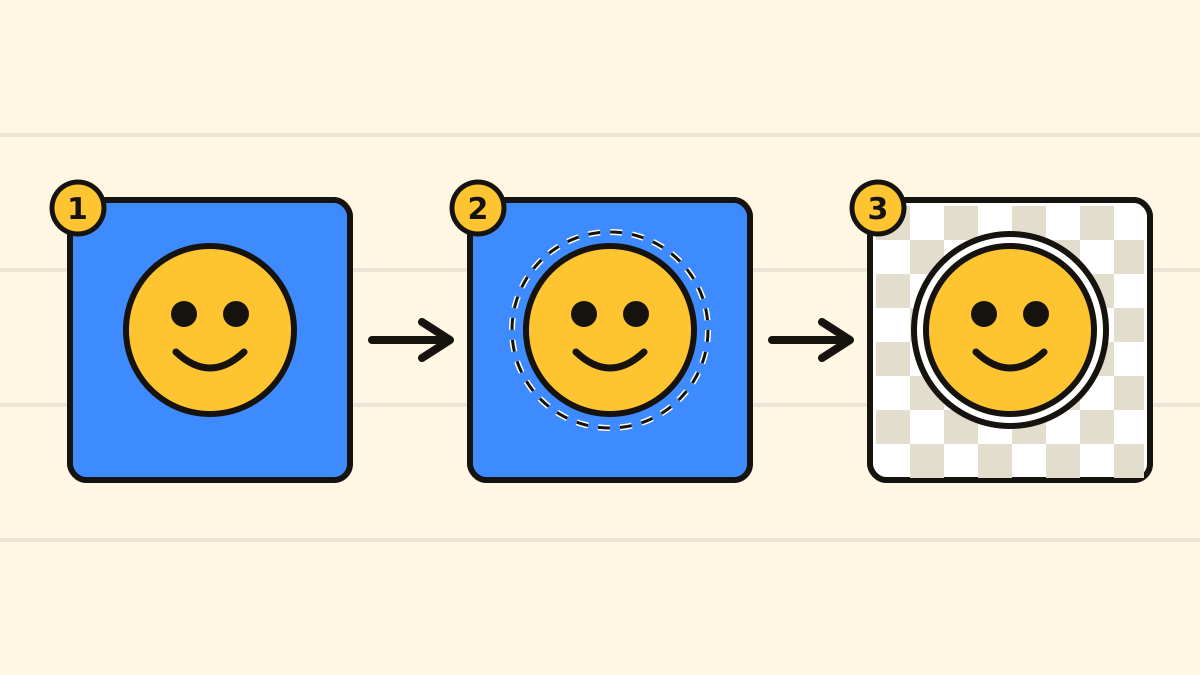
The hardest of those steps was always cutting out the subject — the fiddly business of erasing a background cleanly around messy hair and edges. That is now the easiest, thanks to machine learning. A model trained to tell “subject” from “background” can lift a person, a pet or an object out of a photo in about a second, leaving the transparent background we met all the way back in the GIF story — the same clean, die-cut edge as a good paper sticker.
The quietly important part is where this now happens. These models have become small enough to run on your own device, in the browser, which means your photo never has to be uploaded anywhere to be cut out. The magic scissors live on your side of the screen.
Any picture, every app
Cutting out is only half the job. Remember the fragmentation from our “went global” story: every app wants a different size and format — 512-pixel WebP here, PNG there, a video or an APNG for the animated ones. Getting a picture accepted as a real sticker means matching each platform’s exact rules.
That translation is the other thing software now does for you: take one image and produce the right file, at the right size, in the right format, for the app you actually use. It is, to be plain about it, exactly what this website is for — turning any picture you have into a sticker your chat app will accept, without installing anything. The century-long gap between collecting stickers and making them has closed, and it closed on the side of the ordinary person.
A word on using memes
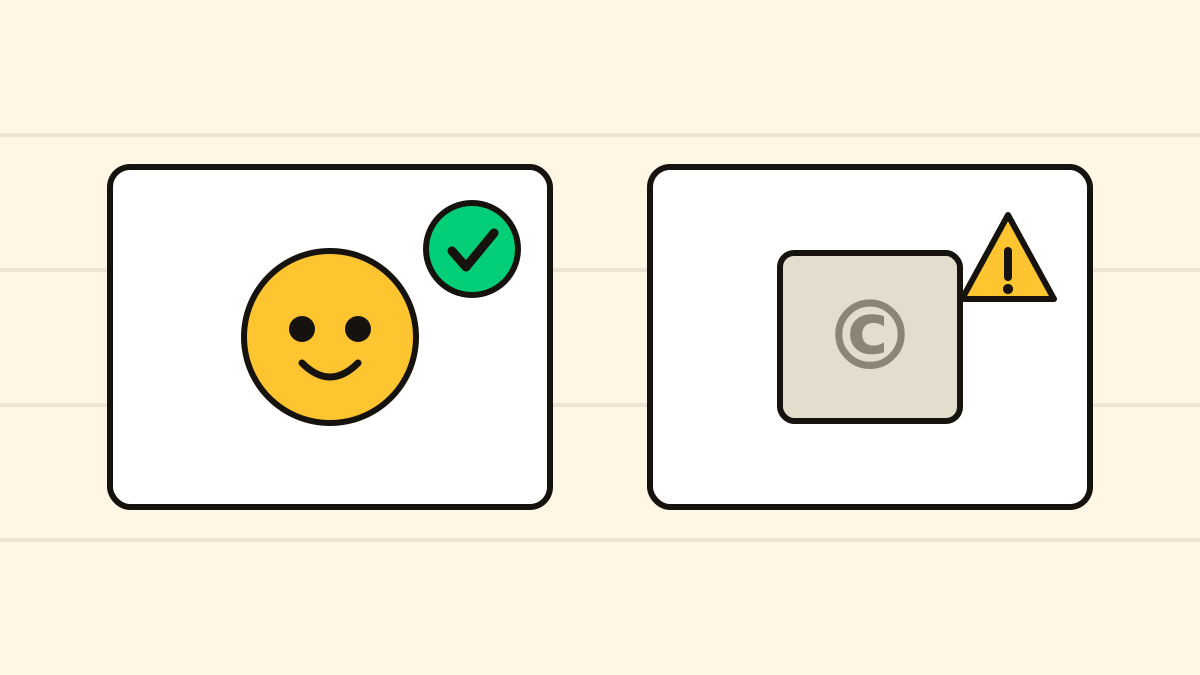
One honest note before you go and make something, because this history is full of famous images and it would be strange not to mention it. Most memes, characters, mascots, logos and other people’s photos are protected — by copyright, and often by trademark too. The fact that something is everywhere online does not make it free to use.
In practice, turning a meme into a sticker for your own chats with friends is low-stakes, and the world is full of people doing exactly that. The picture changes when you start distributing or selling packs of someone else’s characters — that is where rights holders object, and where “it’s just a meme” is not a defence. Ideas like parody and fair use do exist, but they are narrow, they differ from country to country, and they are not a blanket permission. The genuinely safe path is the one this whole series keeps returning to: make it from your own photos and drawings, or from art you are allowed to use. (This is general information, not legal advice.)
The whole story, in your pocket
So here is where the arc lands. A “meme” started as a biologist’s word for anything that copies, changes and spreads. For decades it needed walls, photocopiers, e-mail forwards, forums and formats to do that copying. Emoji shrank feeling to twelve pixels; stickers grew it back into a character with a name; and the making of them, once locked in studios, is now a thing you can do on the bus.
Every person in this story who mattered did the same small, human thing: they took a picture, made it their own, and passed it on. The only difference today is that the “they” is now you, and the studio is in your hand.
You have read the whole history of the thing. Now make the next tiny piece of it. Pick a photo, cut it out, and turn it into a sticker — your character, your pack, your turn.