
Sticker stories · Part 2 · 2005 – 2012
Image macros, LOLcats and rage comics
Between about 2005 and 2012, memes stopped being one-off jokes and got a grammar — a fixed layout, a signature font, and a cast of faces anyone could reuse.
The last story followed the format that gave memes a moving body. This one is about the moment they got a grammar — a set of rules for how a meme is built, shared widely enough that anyone could snap one together in a minute. Between roughly 2005 and 2012, three overlapping waves did it: the image macro, the LOLcat, and the rage comic.
The layout that became a language
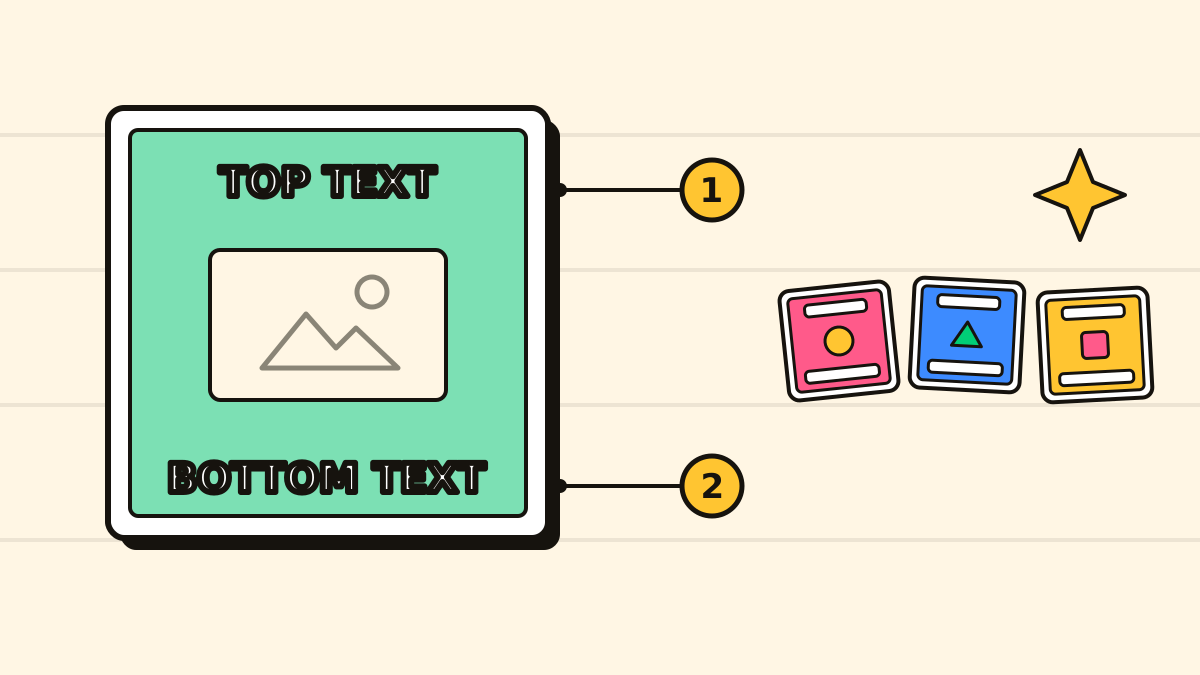
An image macro is just a picture with words laid over it, almost always bold, almost always white with a black outline, almost always one line across the top and one across the bottom. The name comes from the Something Awful forums in the early 2000s, where a “macro” was a shortcut that pasted a stock image into a post; the picture-with-caption kind kept the name.
The font is part of the grammar. That heavy, squeezed typeface is Impact, designed by Geoffrey Lee in 1965 and — this is the accident of history that made it the meme font — bundled with Windows for decades, so it was already on almost everyone’s computer. White fill, black outline, top and bottom: a format so fixed that you read the layout as “this is a joke” before you have read a single word.
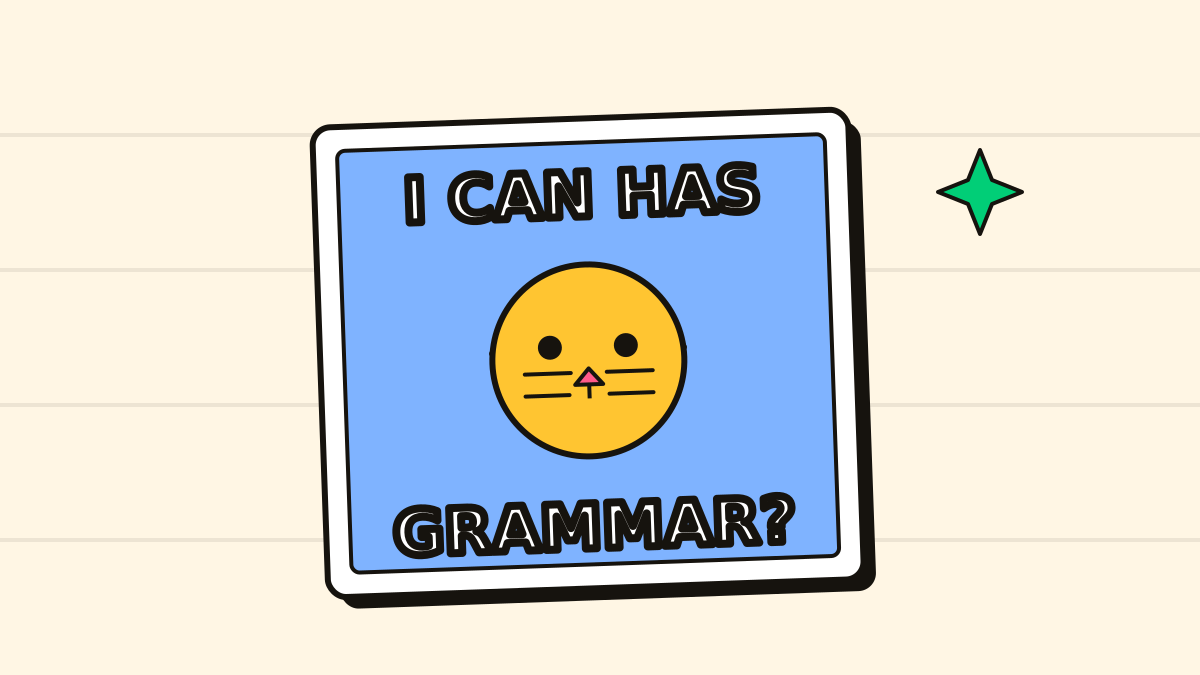
I can has cheezburger?
The wave that carried image macros to the whole internet had whiskers. Around 2005, users on 4chan began posting cat photos with silly captions on Saturdays — “Caturday”. The captions grew their own broken baby-talk grammar, “lolspeak”: I can has cheezburger?, im in ur base, invisible bike.
In January 2007 a software developer named Eric Nakagawa and his collaborator Kari Unebasami put one such cat — captioned “I Can Has Cheezburger?” — on a simple website of the same name. It became a runaway hit, then a business: a whole network of user-submitted caption sites. LOLcats matter here because they took the image-macro grammar and handed the pen to everyone. You didn’t need to be funny in the old way; you needed a cat and the format.
Advice animals and the rule of templates
Next the format specialised. Advice animals were image macros built around a single character on a colour-wheel background, and each came with its own rigid formula. Advice Dog gave (bad) advice; Courage Wolf barked motivation; Socially Awkward Penguin told cringe stories; later Bad Luck Brian, around 2012, collected misfortune. The character told you the kind of joke; you supplied the specifics.
This is the important turn. A meme was no longer a single image — it was a template with rules, a little machine for making jokes. Websites sprang up to industrialise it: meme generators where you picked a template, typed two lines, and got a finished macro in seconds. The three-step pattern from our earlier stories — copied, changed, selected — now had a factory.
A cast of faces: rage comics
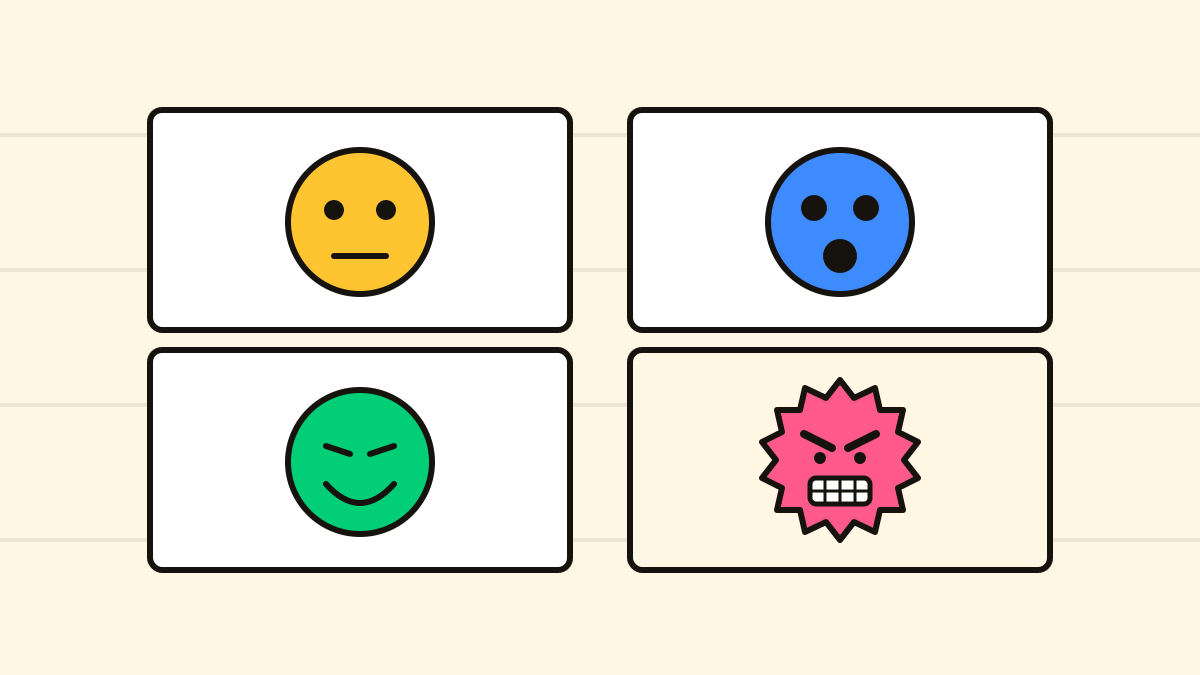
Alongside the macros came a different but related grammar: the rage comic. Starting around 2007–2008 on 4chan and exploding on reddit (in a forum whose name was a keyboard-mash scream of rage), these were crude, deliberately ugly MS-Paint strips built from a reusable cast of faces — a furious figure yelling a row of letters, a wobbly grin, a blank-eyed “forever alone”, a too-calm “poker face”. The panels were throwaway; the faces were the point. You didn’t draw a new character, you reused the shared ones — exactly as troops had reused Kilroy in our story on paper memes.
Rage comics made the “cast” half of the grammar explicit. Between the macros and the comics, a meme now had both things a language needs: a format (how it is laid out) and a vocabulary (the templates and faces you build from).
Why “grammar” is the right word
Before this era, going viral took luck: the right clip, the right forward, the right forum. After it, making a meme was closer to writing a sentence. There were parts of speech — top text, bottom text, this face, that template — and rules for combining them, and once those rules were common knowledge, the barrier to entry basically vanished. Millions of people who would never have animated a Dancing Baby could, and did, make a passable LOLcat before lunch.
That is what “memes got a grammar” means — and it set up the last act of this history. Because the next thing to be squeezed into a tiny, fixed, endlessly reusable vocabulary was not a joke format at all. It was emotion itself, drawn at twelve pixels square.
Memes had learned to reuse a small cast of faces to carry a feeling. At almost the same time, on the other side of the world, phone companies were doing the very same thing on purpose — building a fixed, tiny set of little faces meant to travel inside any message. They would be called emoji.
Next in this series: how emoji were born — from a 12×12 grid on a Japanese phone to the keyboard in your hand.